
On January 8 in Islamabad, an auction will be held to acquire two new franchises of the Pakistan Super League (PSL). A total of 10 interested parties, including local and foreign companies, will compete in the bidding. However, this time the franchise sale process will be different from previous years.
Instead of the previously used sealed-bid system, the Pakistan Cricket Board (PCB) has decided to adopt an open auction, which is expected to push prices higher.
According to official documents, the auction will begin with the announcement of a reserve price, after which real-time bidding will take place.
The successful bidder will be awarded a new franchise and will be able to select one city for their team from the following list:
- Faisalabad
- Rawalpindi
- Hyderabad
- Sialkot
- Muzaffarabad
- Gilgit
If a successful bidder proposes a city outside this list, there is a defined procedure for consideration.
PCB will charge a one-time fee of USD 1 million for reviewing such a proposal, although the final decision will rest with the board.
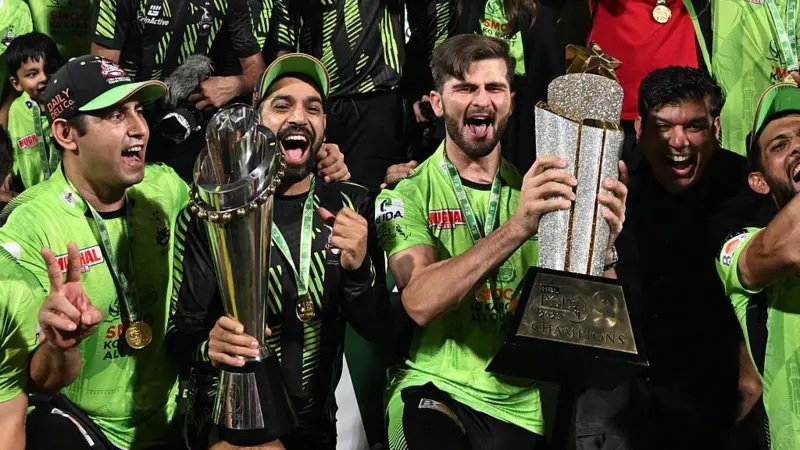
This opportunity to acquire a PSL franchise comes after an eight-year gap. The league, which began in 2016, has now completed nearly a decade.
PCB, the sole regulatory authority of the PSL under existing agreements, had already planned to expand the league to eight teams from 2026, increasing the number from six to eight.
The last franchise sale took place in 2018, when Multan Sultans was auctioned. The PSL originally began with five teams, and its early matches were played in the United Arab Emirates.
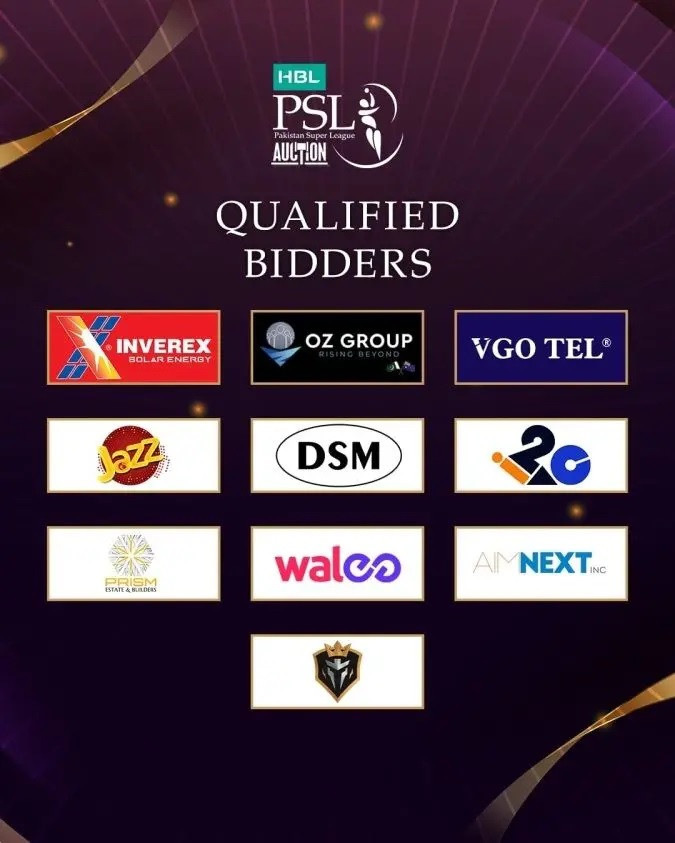
Who Are the 10 Bidders Interested in Owning a New PSL Team?
The bidders come from diverse sectors, including telecommunications, energy, fintech, real estate, and technology.
Jazz
Pakistan’s largest digital telecom company, Jazz, is one of the most prominent bidders. This is its second attempt to acquire a PSL franchise.
Previously, in 2015, when the company was known as Mobilink, it participated in the bidding but was unsuccessful. Later, Jazz entered a three-year title sponsorship deal with Lahore Qalandars and has continued using cricket as a key branding platform.
Ali Tareen
After parting ways with Multan Sultans, Ali Tareen has once again shown interest in the PSL. He is bidding through his company Daharki Sugar Mills, based in Ghotki district, Sindh.
Ali Tareen belongs to a major industrial family, while his father Jahangir Tareen is a well-known political and business figure. Notably, Ali Tareen declined to continue owning Multan Sultans due to its annual franchise fee of PKR 1.375 billion.
Inverex
Active in the energy sector, Inverex already has strong ties with Pakistan cricket and the PSL. Known for its work in solar energy and clean mobility, the company has gained recognition through its PSL segment “Hamare Heroes”, highlighting individuals contributing to sports and society.
VGO Tel
Local mobile technology brand VGO Tel has been investing directly in Pakistan cricket through PSL sponsorships.
Walytik
A company operating in marketing technology and fintech, Walytik has shown interest in cricket’s digital ecosystem. In 2014, it acquired PSL digital live-streaming rights for two years at PKR 1.875 billion.
Prism Estates & Builders
This real estate developer is participating as part of a consortium, which also includes cryptocurrency exchange XchangeOn, a sponsor during the previous PSL season.
OZI Group
Based in Australia, OZI Group is entering cricket ownership for the first time. According to its leadership, the group relocated to Pakistan two years ago. The name “OZI” is derived from Australian cultural slang.
I2C
A global fintech company specializing in digital banking, payments, and card solutions, I2C is among the notable international bidders.
Kingsmen Group
A diversified investment group owning several cricket properties in North America, including DFW Kingsmen and Kingsmen X. Sources suggest the group is interested in acquiring a team named Hyderabad.
MNext Incorporated
A North America–based technology and innovation company, also competing for a PSL franchise.
How Will the PSL Franchise Auction Work?
The auction will take place in two stages, with real-time bidding.
- The process will begin with a reserve price, announced before the auction.
- The highest bidder will win the franchise and also gain first choice of city selection.
- Franchise rights will be granted for 10 years (until 2035), along with Right of First Refusal for renewal.
For the first three years, franchise owners will not be allowed to sell, transfer, or assign any team-related rights.
PCB has guaranteed each new franchise a minimum revenue of PKR 850 million per season for the next five seasons.
To participate:
- A non-refundable bid fee of USD 20,000 had to be submitted.
- Each bidder was also required to deposit a security amount of USD 200,000.
Unsuccessful bidders will receive their security amount back without interest. For successful bidders, the amount will be adjusted into the initial franchise payment.
If a successful bidder fails to sign the agreement within three days, does not complete required payments, or fails to provide guarantees demanded by PCB, the security deposit will be forfeited.
How Do PSL Franchises Make Money?
The major source of income for PSL franchises comes from PCB’s central revenue pool, which includes:
- Media rights (TV & digital): 95% shared equally among all teams
- Title and ground sponsorships: 95% distributed equally
Ticket sales—corporate boxes, hospitality, and general tickets—are another revenue source, although free tickets reduce potential earnings. Ticket revenue is also shared equally, regardless of attendance differences.
Additionally, franchises earn independently through:
- Jersey, helmet, and trouser sponsorships
- Digital advertisements and brand partnerships
Why Did PCB Add Two New Teams After Eight Years?
According to PCB, contractual and financial constraints prevented expansion earlier. Under the PSL’s joint financial model, 95% of total league revenue is shared among existing franchises, while only 5% goes to PCB.
Adding new teams earlier could have reduced existing teams’ income. From the 11th season onward, as new media and commercial deals are negotiated, PCB has decided this is the right time to expand.
Except for Multan Sultans, all franchises have remained financially profitable.
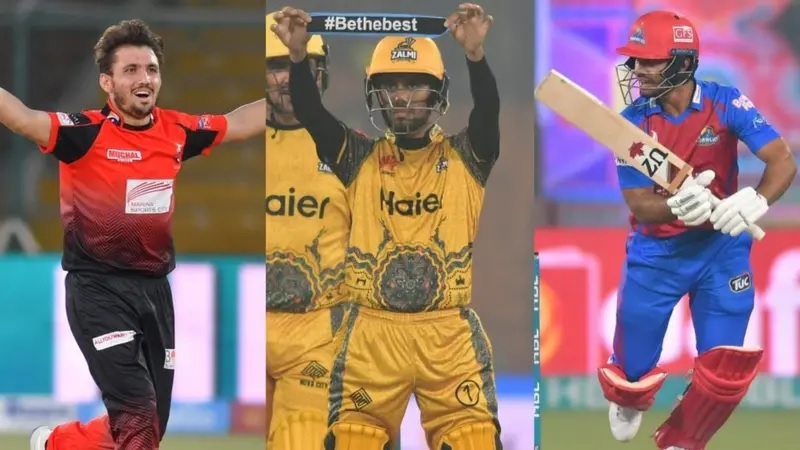
Current Status of Existing PSL Teams
All existing franchises have renewed their agreements except Multan Sultans, whose owner Ali Tareen declined extension. PCB has taken over ownership and will operate the team next season before selling it to a new buyer.
The Tareen family paid PKR 7.7 billion to PCB over seven years for Multan Sultans. Under the new valuation, its annual fee was set at PKR 1.375 billion.
After 10 years of PSL, franchise fees must increase by 25% of the current fee or 25% of the new market value—whichever is higher.
Updated Valuation of PSL Franchises
- Lahore Qalandars – PKR 670 million (most expensive)
- Karachi Kings – PKR 638.7 million
- Peshawar Zalmi – PKR 487.5 million
- Islamabad United – PKR 470 million
- Quetta Gladiators – PKR 359.5 million (lowest valuation)